Across the developing world, cities are expanding at an unprecedented pace. Governments, investors, and talent are all drawn to the same urban centers chasing opportunities, infrastructure, and visibility.
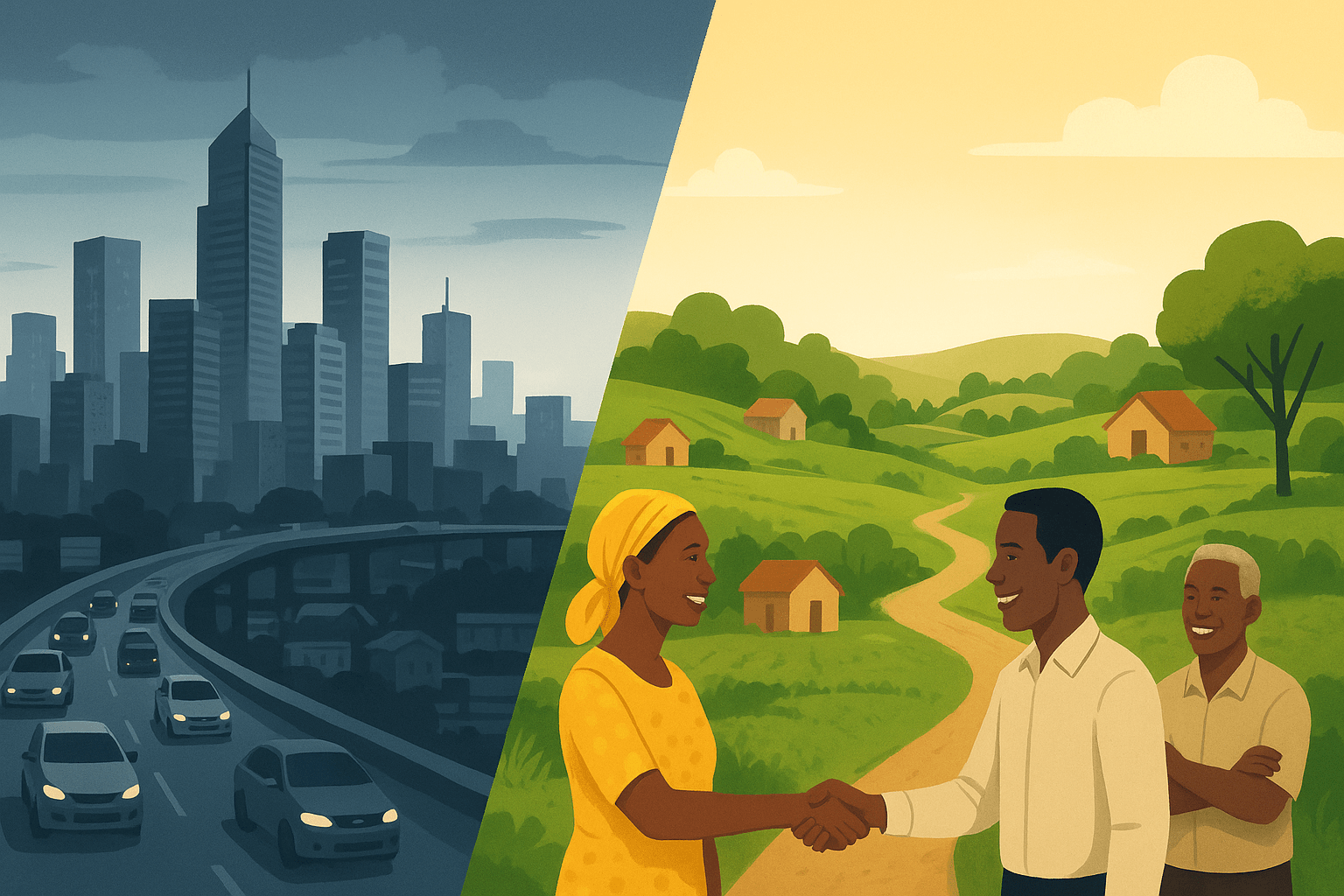
But when development becomes too city-centric, it quietly drains the potential of other regions and weakens national stability.
True progress doesn’t happen when one city thrives it happens when people everywhere have a chance to build a dignified life where they are.
1. The Hidden Cost of Concentrating Growth
When a country pours its energy into one major city, it creates an illusion of progress. Skyscrapers rise, GDP numbers look good, and foreign investment flows in but inequality deepens.
Rural areas and secondary towns remain underdeveloped. Youth migrate to the city for jobs, overcrowding increases, and infrastructure struggles to keep up.
The result? Rising unemployment, informal settlements, and regional resentment that erode social cohesion.
2. Example 1: Lagos, Nigeria
Lagos contributes roughly 30% of Nigeria’s GDP and attracts the majority of foreign investment.
But this concentration has come with consequences housing crises, heavy traffic, and immense pressure on social services. Meanwhile, smaller cities like Ibadan, Enugu, and Kano remain underdeveloped despite their potential to absorb industries and create regional employment.
If Nigeria redirected even a portion of its investment toward strengthening regional economies, millions could find opportunity closer to home reducing migration pressure and unlocking local value chains.
3. Example 2: South Korea’s Balanced Approach
In the 1970s, South Korea faced a similar problem nearly all economic activity centered in Seoul.
The government responded with “Balanced National Development Policies,” deliberately investing in infrastructure, universities, and industries in other cities like Busan, Daejeon, and Gwangju. Over time, this approach reduced inequality, eased pressure on Seoul, and created a resilient, innovation-driven economy where multiple cities contribute to growth.
4. The Lesson
A nation’s stability depends on distributed prosperity.
When development policies favor one location, they waste human potential elsewhere. The future of development isn’t about building taller buildings it’s about building stronger communities.
5. Sustainable Solutions: Development That Enriches People Where They Are
a. Regional Industrial Clusters
Encourage industries to locate where raw materials or skills exist. Agro-processing in rural areas, for instance, keeps value and jobs local instead of exporting everything to urban factories.
b. Infrastructure Beyond Capitals
Invest in reliable transport, internet, and energy networks in secondary towns. Connectivity creates economic gravity businesses will follow stability and access.
c. Decentralized Education and Innovation Hubs
Build universities, research centers, and tech parks outside major cities. Local talent, when nurtured where it lives, becomes the backbone of regional transformation.
d. Local Financing and Incentives
Banks and investors should offer favorable conditions for businesses that establish themselves outside capital cities. Government tax incentives can accelerate this shift.
e. Promote Digital Inclusion
With technology, economic participation no longer requires migration. Remote work, e-commerce, and local digital services can make “staying home” economically viable.
My personal advice,
A country that develops only one strong city builds a fragile future.
Real strength comes from distributed prosperity when every region contributes, and every person has a chance to thrive where they are.
Balanced development is not charity; it’s strategy. It’s how nations turn growth into stability and stability into shared prosperity.
I had the chance to exchange with Mr. Tareq Ghannam, Founding Partner at Praxis Urban Designers (www.bureaupraxis.com), and we had an amazing conversation about the modern realities of landscapes. Truly inspiring people shaping what the future of our world should look like.