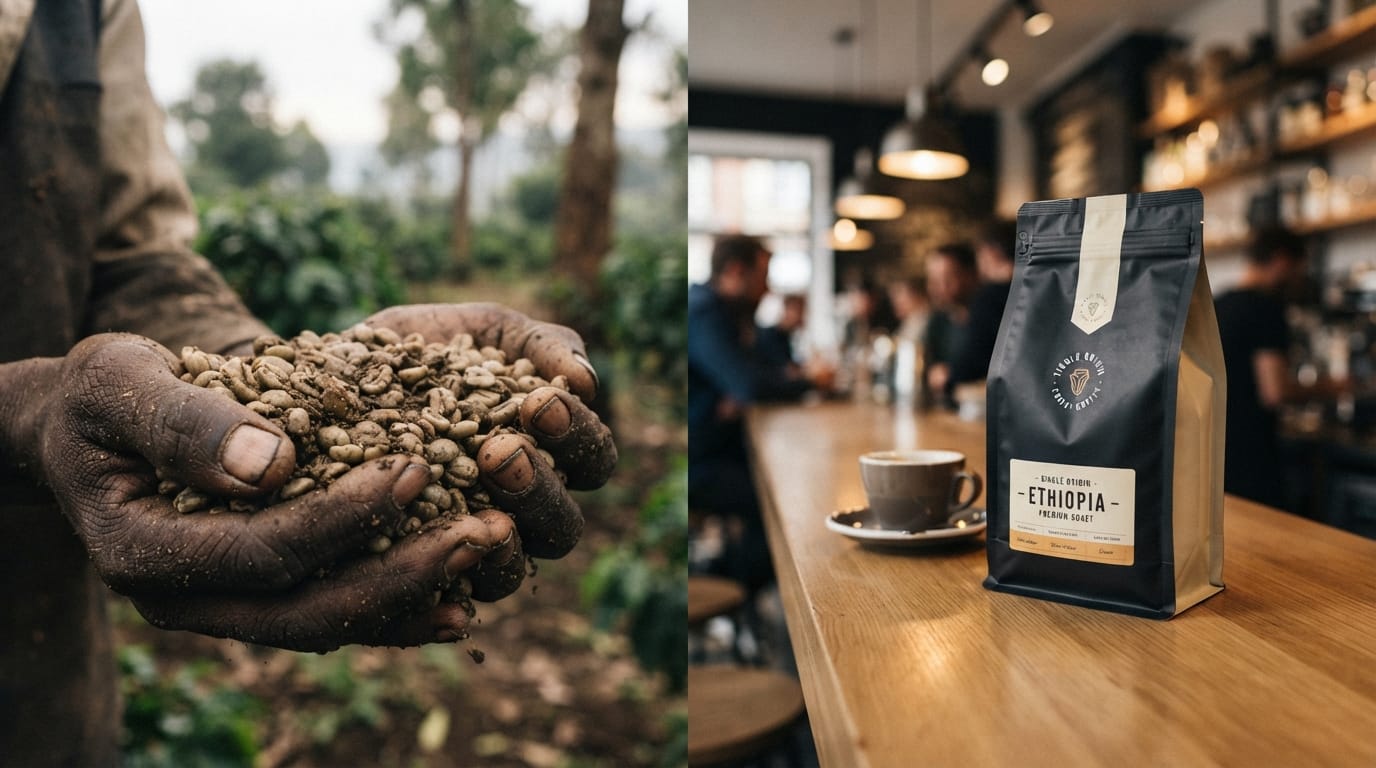
Africa grows some of the most sought-after coffee on earth. Ethiopian Yirgacheffe and Sidamo. Rwandan and Burundian high-altitude Bourbon. Kenyan AA. These names carry weight in specialty cafes from Tokyo to Toronto. And yet the continent that grows them captures a sliver of what the finished product is worth.
Africa’s total coffee export earnings average roughly $7.5 billion a year, which represents about 3 percent of the $263.5 billion global coffee market, according to industry estimates reported by COCEFAAA in 2026. That is not a rounding error. That is the entire continent, the source of some of the most prized beans in the world, taking home a fraction of a market it makes possible.
I call the pattern behind this the Extraction Reflex. It is a behavioral default, not an economic inevitability, and I have watched it operate across agribusiness sectors far beyond coffee. I described an adjacent version of it in The Strategy Illusion, where I argued that most African SMEs mistake activity for direction. The Extraction Reflex is what that confusion looks like at sector scale, repeated across an entire continent’s worth of export decisions.
WHAT THE EXTRACTION REFLEX ACTUALLY IS
The Extraction Reflex is the tendency to sell a commodity at the earliest possible point in its value chain, in exchange for the fastest possible cash, even when downstream processing would capture substantially more value. It is not laziness. It is not a failure of ambition. It is a rational response to short-term cash pressure that becomes, over generations, an unexamined default.
A coffee farmer facing a harvest, a loan repayment, and a family to feed sells the cherry or the green bean at the nearest possible point of sale. A cooperative facing the same pressure does the same thing at slightly larger scale. A national export board, under pressure to show foreign exchange earnings this fiscal year, optimizes for the volume that moves fastest, not the volume that earns most over a longer horizon.
| The Extraction Reflex is not a lack of ambition. It is the fastest available cash, chosen so consistently that it stops looking like a choice at all. |
THE SCALE OF THE GAP
The numbers are not subtle once you put them side by side.
| Metric | Figure | Source |
| Global coffee market size | $263.5B | Industry estimate, 2025/2026 |
| Africa’s coffee export earnings | $7.5B | COCEFAAA, average 2025 to present |
| Africa’s share of global value | ~3% | Same source |
| Africa’s share of global beans | ~14% | Continental production estimate, 2026 |
| Uganda 2025 export value | $2.0B+ | MAAIF, coffee year ending May 2025 |
| Ethiopia export value (2023/24) | $1.7B | Ethio Coffee / Ethiopian export data |
Read those last two lines against the first three. Africa supplies roughly 14 percent of the world’s coffee by volume but captures about 3 percent of the market’s total value. The gap between those two percentages is not explained by quality. It is explained by where in the value chain African producers choose, or are forced, to sell.
This is not unique to coffee. The same structural pattern repeats in cocoa, where African nations collectively earn roughly $10 billion from a $120 billion global chocolate retail market, well under 10 percent of total value, largely because, as COCEFAAA’s leadership put it, most countries continue to export raw beans rather than processed cocoa butter, powder, and finished chocolate.
THE COUNTER-EVIDENCE: THIS GAP IS NOT FIXED
Here is what makes the Extraction Reflex worth naming rather than simply lamenting. It is not destiny. Uganda’s coffee sector offers the clearest recent proof. In May 2025, Uganda surpassed Ethiopia as Africa’s leading coffee exporter by volume, shipping 47,606.7 tonnes in a single month, a 43.59 percent year-on-year increase that pushed annual export values past $2 billion. That growth was explicitly tied to investment in quality and value addition, not just volume expansion.
Ethiopia has run a deliberate, decades-long campaign in the opposite direction from the Extraction Reflex. Beginning in 2004, the government launched the Ethiopian Fine Coffee Trademarking and Licensing Initiative, registering international trademarks for three of its most recognised growing regions, Yirgacheffe, Sidamo, and Harar. According to reporting on the initiative, this was a deliberate shift from raw bean exports toward customized, value-added, branded products. It is the single clearest example on the continent of a government treating origin identity as an economic asset rather than a footnote.
These two cases matter because they prove the same point from different angles. Uganda shows that volume growth and value-addition investment can move together. Ethiopia shows that origin branding, built deliberately over twenty years, can change a country’s position in a global value chain. Neither happened by accident. Both required someone to refuse the Extraction Reflex at a specific, identifiable moment.
WHY THE REFLEX PERSISTS EVEN WHEN THE EVIDENCE SAYS OTHERWISE
If the case for value addition is this clear, why does the Extraction Reflex remain the default across most of the continent? A 2026 academic study tracking nearly three decades of global coffee trade data found that many African countries remain stuck exporting green, unprocessed beans while Asian producing countries climbed the value chain into roasted and soluble coffee exports over the same period. The researchers found this pattern correlates with structural factors in how countries participate in global value chains, not simply with product quality.
Three behavioral forces keep the reflex in place, and none of them are about coffee quality.
| WHY THE EXTRACTION REFLEX PERSISTS: THREE BEHAVIORAL FORCES |
| 1. IMMEDIATE LIQUIDITY PRESSURE OVERRIDES LONG-TERM VALUE. A smallholder farmer or cooperative facing a harvest, a debt, and a planting season has a behavioral incentive structure that rewards the fastest cash conversion, even at a lower total return. This is loss aversion operating at the level of survival, not strategy, and it compounds across a value chain where every actor faces the same pressure at every stage. |
| 2. PROCESSING INFRASTRUCTURE REQUIRES PATIENT CAPITAL THAT MARKET STRUCTURES RARELY OFFER. Roasting, branding, and retail distribution require capital commitments measured in years, not seasons. Export financing across much of the continent is built around the commodity cycle, not the brand-building cycle, which means the actors most capable of breaking the reflex are structurally discouraged from doing so. |
| 3. THE BRAND PREMIUM IS INVISIBLE UNTIL SOMEONE PROVES IT EXISTS. Before Ethiopia trademarked Yirgacheffe and Sidamo, the brand premium those names now command did not exist as a measurable asset on anyone’s balance sheet. Most producers cannot justify investing in something that has not yet been demonstrated to work in their specific market. This is why Uganda’s and Ethiopia’s examples matter disproportionately. They are proof of concept that future investors and policymakers can point to. |
This is the same mechanism I described in Why Rwanda’s Export Growth Depends on Buyer Psychology, where I argued that real market value is determined by the buyer, not the producer. The Extraction Reflex compounds that dynamic. Producers who never participate in the part of the value chain where buyers actually form their willingness to pay never learn what that willingness to pay depends on.
WHAT BREAKING THE REFLEX ACTUALLY REQUIRES
None of this is an argument that every smallholder cooperative should open a roastery. That is not realistic, and treating it as the only solution is its own kind of unhelpful idealism. Breaking the Extraction Reflex happens in layers, and different actors can act on different layers simultaneously.
- Name and trademark origins before someone else defines them generically. Ethiopia’s twenty-year head start on Yirgacheffe and Sidamo as protected, recognised names is now an asset competitors cannot easily replicate. Every origin without a comparable trademark strategy is leaving that asset unclaimed.
- Treat processing investment as a market-access strategy, not a manufacturing upgrade. Uganda’s growth was paired with quality and value-addition investment, not volume alone. The two reinforced each other rather than competing for the same capital.
- Build the institutional case before asking for the patient capital. Financing structures follow proof, not aspiration. The producers and countries that document their value-addition results first are the ones who unlock financing for the next stage.
- Recognise that the reflex operates at every scale, not just the smallholder level. National export boards, large estates, and individual farmers all face a version of the same liquidity pressure. The solution has to address the incentive structure at each level, not assume the problem only exists at the bottom of the chain.
WHY THIS BELONGS IN THE ACT EXPO CONVERSATION
The data behind Article 01 on the $3.24 problem showed that Rwanda already captures the highest tea price at Mombasa while still exporting 97.3 percent of its tea in raw form. That is the Extraction Reflex operating even inside a relative success story. The producers and policymakers who recognise this distinction, that a commodity-level premium and a true value-addition strategy are two different achievements, are the ones positioned to act on both fronts simultaneously.
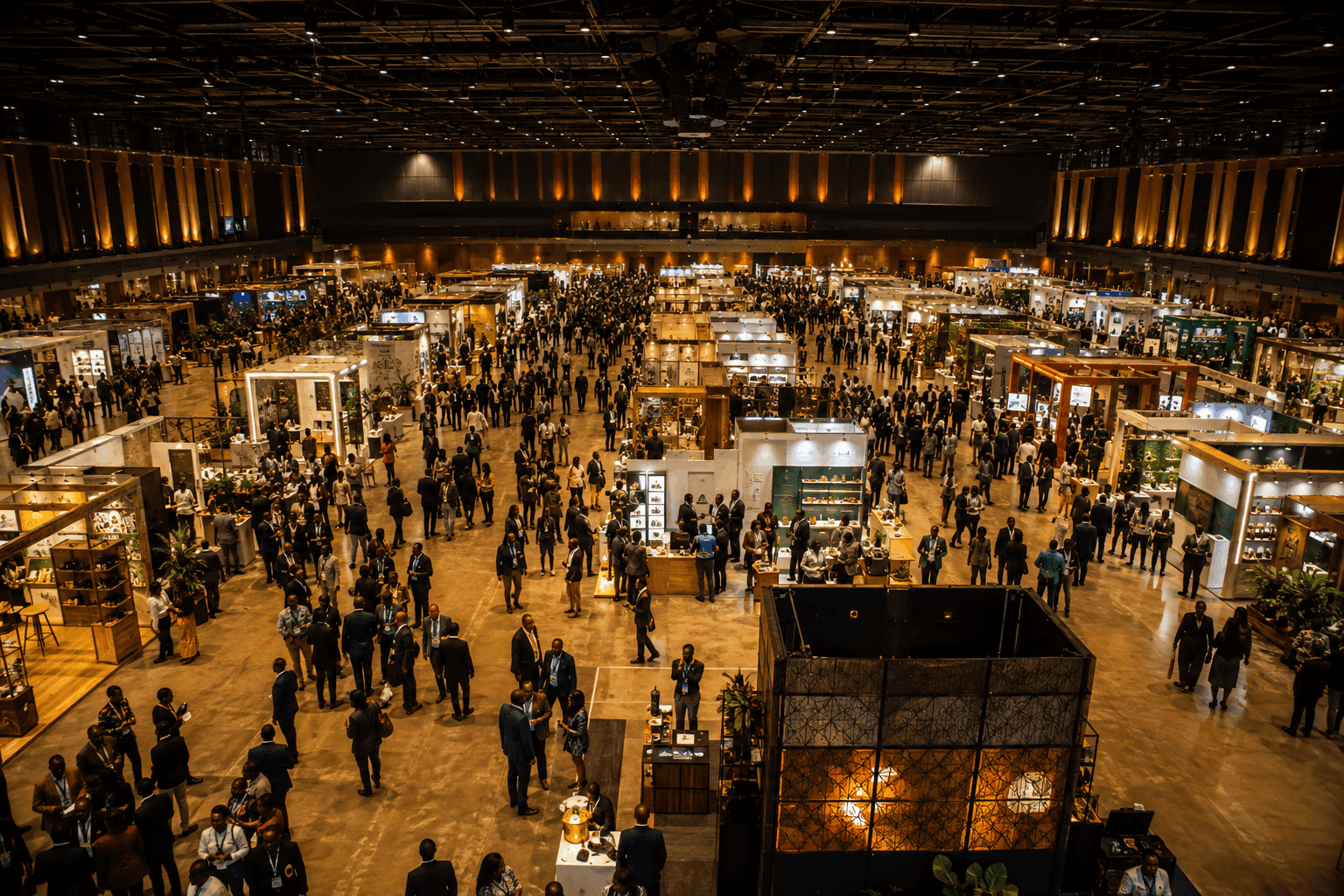
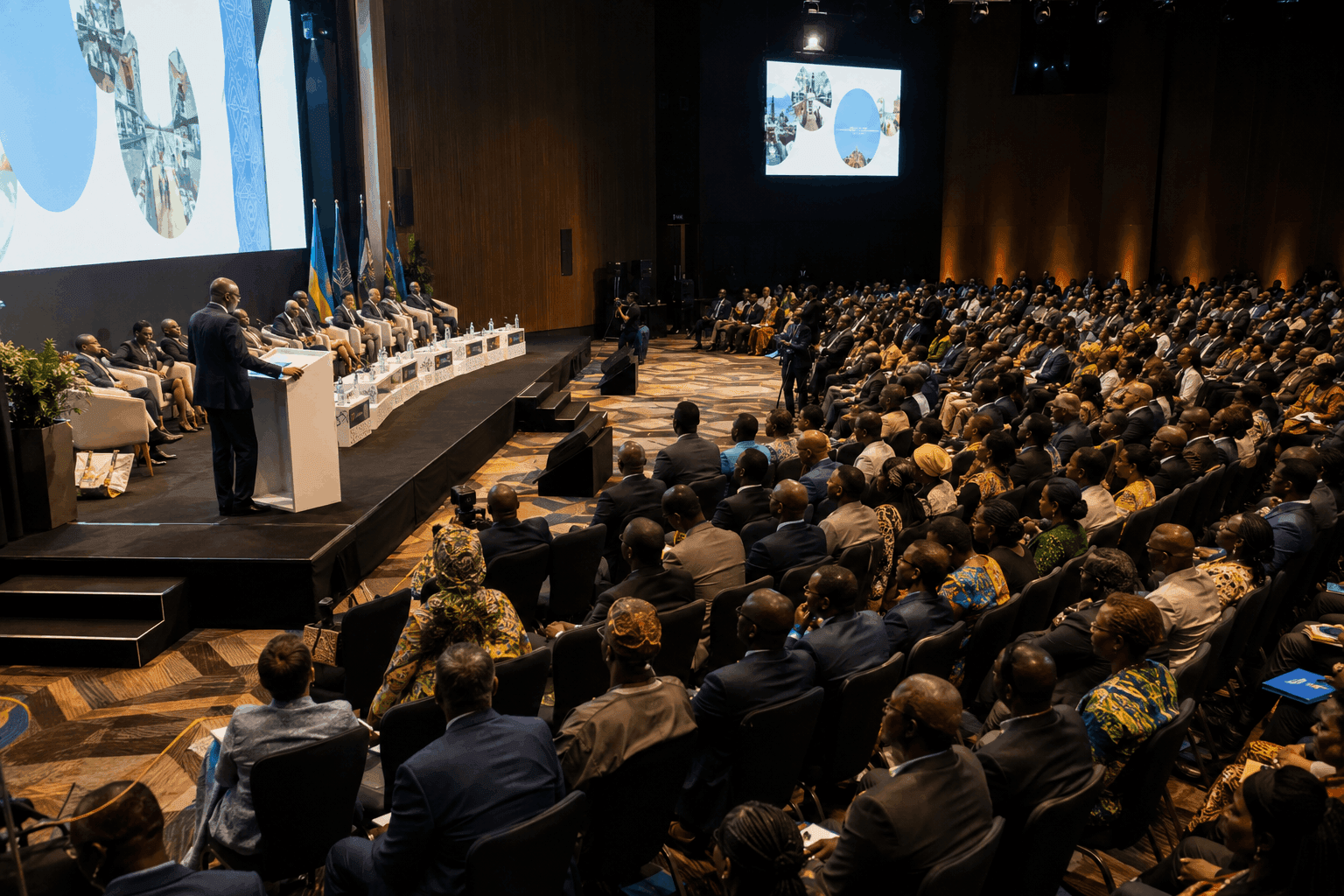
The Africa Coffee and Tea Expo 2026 in Kigali brings together exactly the mix of producers, processors, investors, and policymakers who can act on the layers described above at the same time, in the same room. Uganda and Ethiopia did not break the Extraction Reflex through good intentions. They broke it through specific, financed, sustained decisions. The conversations that produce the next version of those decisions for other origins are the ones worth having this July.
FREQUENTLY ASKED QUESTIONS
What is the Extraction Reflex in African agribusiness?
The Extraction Reflex is a behavioral framework developed by meyself describing the tendency of African commodity producers, from smallholder farmers to national export boards, to sell raw, unprocessed product at the earliest possible point in the value chain, even when downstream processing would capture significantly more revenue. It is driven by immediate liquidity pressure rather than a lack of ambition, and it explains why Africa earns roughly 3 percent of the $263.5 billion global coffee market while supplying about 14 percent of global coffee volume.
Which African countries have successfully broken the Extraction Reflex in coffee?
Ethiopia and Uganda are the two clearest examples. Ethiopia began a deliberate value-addition strategy in 2004 by trademarking the Yirgacheffe, Sidamo, and Harar coffee regions internationally, shifting from raw exports toward branded, customized products. Uganda surpassed Ethiopia as Africa’s largest coffee exporter by volume in May 2025, with annual export values exceeding $2 billion, growth that government sources tied directly to investment in quality and value addition alongside volume expansion.
Why does Africa capture such a small share of global coffee market value despite producing high-quality beans?
Africa’s coffee export earnings average roughly $7.5 billion a year against a global coffee market valued at approximately $263.5 billion, around 3 percent of total market value. The gap is not explained by bean quality. Academic research tracking nearly three decades of global coffee trade found that many African producing countries remain exporters of unprocessed green beans while Asian competitors climbed into roasted and soluble coffee exports over the same period, a pattern correlated with structural participation in global value chains rather than product quality.