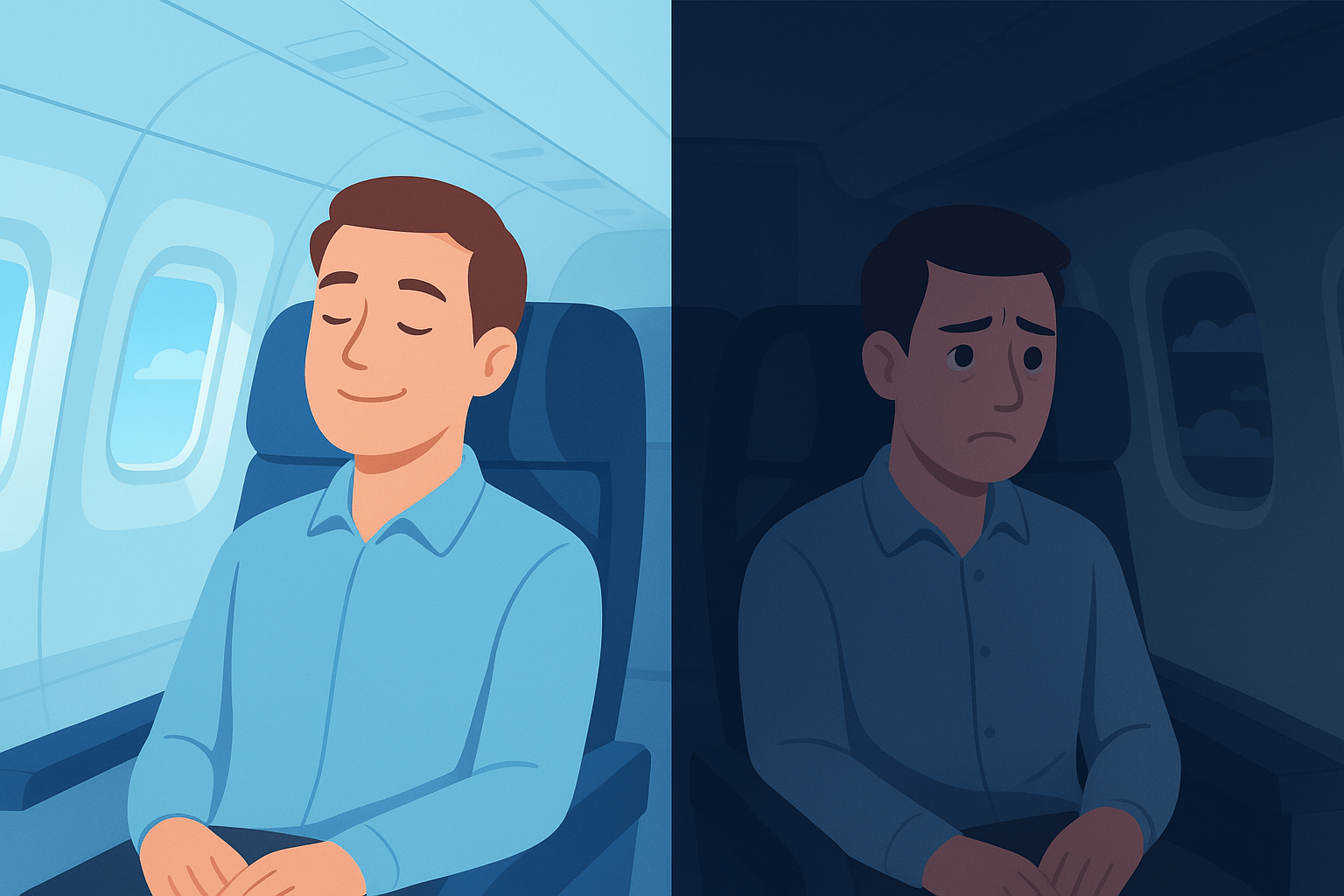
Air travel is often misunderstood as a technical business, a matter of aircraft, fuel, schedules, and safety protocols. But after years of observing business systems, customer behavior, and service gaps across industries, I have come to a simple conclusion: airlines do not lose customers because of aircraft they lose them because of psychology.
While airlines invest millions in operational performance, they often overlook the emotional performance that defines the passenger experience. A customer’s perception of an airline is shaped long before boarding and long after landing. And when psychological needs are ignored, even the most efficient operation fails to retain loyalty.
This article establishes the core framework: the foundational psychological mistakes airlines make, and the strategic solutions needed to rebuild trust, loyalty, and customer-centered aviation.
1. The Mistake of Assuming Passengers Only Care About Price
Most airlines still operate with the belief that customers choose flights purely on cost.
But human behavior proves the opposite.
Passengers respond far more to: certainty, clarity, respect, and emotional comfort than to small variations in price.
The real danger: when an airline communicates poorly, disrespects the passenger’s time, or mishandles a simple inconvenience, no cheap ticket can save that relationship.
Solution:
Shift from price-based competition to psychology-based value creation reliability, transparency, humanized communication.
2. The Mistake of Treating Passengers Like Cargo, Not People
Aviation efficiency has unintentionally created a culture of detachment. Passengers are processed, moved, and instructed but rarely engaged.
Psychologically, customers want to feel: seen, heard, appreciated, and respected.
When staff speak with robotic tone, when apologies feel scripted, or when customers are treated with suspicion, the experience becomes emotionally cold.
Solution:
Build a human-first service culture: real greetings, genuine empathy training, emotionally intelligent communication.
3. The Mistake of Underestimating the Power of Uncertainty
Air travel is inherently uncertain. But uncertainty without communication creates anxiety one of the strongest negative emotions in consumer psychology.
Delayed boarding without updates feels like abandonment.
Sudden gate changes feel like chaos.
Silence feels like disrespect.
Most passengers can tolerate delays, but they cannot tolerate being uninformed.
Solution:
Adopt a Predictive Communication Protocol: communicate early, even when the answer is “we are still checking.” Clarity reduces psychological tension more than speed.
4. The Mistake of Micro-Irritations That Pile Into Big Frustrations
Passengers rarely switch airlines over one major issue. They leave because of small, repeated irritations: a rude tone at check-in, a broken entertainment system, an unexpected fee, an unresponsive call center, inconsistent rules between staff members.
These small pains accumulate until the passenger silently concludes: “I deserve better.”
Solution:
Create a Zero-Frustration Strategy: eliminate small pains through process mapping, customer feedback loops, and staff empowerment.
5. The Mistake of Prioritizing Efficiency Over Emotional Experience
Airlines optimize boarding speed, turnaround time, luggage flow. But they often neglect the emotional climate.
Psychology teaches us that: Emotions shape memory. Memory shapes loyalty.
A single unpleasant interaction can overshadow an entire smooth flight.
Solution:
Train teams to deliver emotionally smooth operations: calm tone, reassuring gestures, gentle instructions, and visible presence during disruptions.
6. The Mistake of Poor Digital Experience Psychology
Booking websites, apps, chatbots, and customer portals are often designed for engineers, not humans.
Customers feel frustrated when: the interface is confusing, information is hidden, the chatbot loops endlessly, or the app fails during check-in.
Digital friction creates emotional withdrawal.
Solution:
Invest in human-centered aviation technology with clear pathways, real-time information, and behavioral design principles.
7. The Mistake of Breaking the Trust Loop
Trust is the currency of aviation.
When an airline overpromises and underdelivers, passengers feel deceived not disappointed, deceived. Delayed refunds, vague compensation rules, unclear policies all break trust. A broken trust loop is the fastest way to lose a customer permanently.
Solution:
Redesign the Passenger Trust Framework: transparent rules, faster resolution, and proactive compensation.
Conclusion: Airlines Lose Customers in the Mind Before They Lose Them in the Market
The aviation business is not just a movement of aircraft; it is the movement of human emotions. Airlines that fail to understand this will continue to struggle with customer retention, brand perception, and loyalty.
The future belongs to airlines that treat psychology as seriously as they treat safety and operations.
The next articles in this series will take each dimension deeper, exploring emotional journeys, operational psychology, digital experience, staff culture, pricing trust, and the African regional perspective.