
Rwanda’s tea sector has spent years building the right foundations: certified farms, traceable supply chains, cooperative structures that reach 50,000 smallholder farmers organized into 23 cooperatives. The numbers reflect it. Tea generated USD 114.8 million in export revenue from 38,467.7 tons of made tea in fiscal year 2023/2024, according to NAEB. The Fifth Strategic Plan for Agriculture Transformation, PSTA5, targets USD 175 million from 58,600 metric tons by 2029.
These are the right targets, and the systems behind them are necessary. But there is a question that certification alone does not answer. Why does the same certified, traceable Rwandan tea sometimes sell at $3.24 per kilogram, as it averaged at Mombasa in 2025, and sometimes land closer to the $2.05 market floor, in the same auction, in the same season?
The price gap between those two outcomes is not explained by the quality of the leaf. I explored the data behind that in detail in Why Rwanda Tea Tops Mombasa: Lessons for African Producers. What explains the gap is buyer psychology. And it deserves the same deliberate institutional attention that certification and production have received.
WHO IS ACTUALLY BUYING, AND WHAT ARE THEY OPTIMIZING FOR
The Mombasa Tea Auction is not one market. It is a meeting point for buyers with very different mandates. Understanding those mandates is where a real export strategy has to begin.
| Buyer Market | Share of Volume | What This Buyer Needs |
| Pakistan | ~38% | The largest buyer block. Pakistani blenders buy for mass-market tea products and need volume and price consistency above almost everything else. One inconsistent season from a supplier and they find another. |
| Egypt | ~18% | Similar volume logic. Strong price sensitivity. Origins that go quiet during disruptions, as several did in 2025, lose shelf space that takes years to rebuild. |
| United Kingdom | ~9% | Smaller by volume but the most influential on premium perception. UK buyers source for supermarket own-label and specialty brands. They are the ones most likely to pay for origin story and traceable consistency. |
| UAE, Sudan, Russia | ~5% each | Re-export and blending markets. Mombasa prices set a reference point, described in trade circles as the Mombasa benchmark, that ripples through other regional markets. |
Sources: East African Tea Trade Association (EATTA) buyer share data; The East African; The Star, 2022 to 2026
Here is what that table means in practice. The three largest buyer categories at Mombasa are not hunting for the most exceptional lot of the season. They are managing supply contracts. They need the tea to taste the same in March as in October, and they need to know it will show up. As
EATTA describes its own auction cycle: the buyer’s job is to meet client requirements as efficiently and as cheaply as possible, or risk losing those clients to a competing buyer. That one sentence reframes what an export strategy should prioritize.
| The buyer’s job is not to find the best tea of the season. It is to find tea they can depend on. |
A producer who delivers one outstanding lot and three inconsistent ones has a marketing problem dressed up as a quality success story. A producer who delivers four predictable, reliable lots, even if none sets a record, has built the kind of supply relationship that blending houses actively protect.
WHAT CERTIFICATION DOES AND WHERE IT STOPS
Nothing here argues against certification. It is not optional, and this article is not questioning its value. Without it, a producer is not in the conversation at all.
| Indicator | Value | Period | Source | Context |
| Tea export revenue | $114.8M | 2023/2024 | NAEB / MINAGRI | 13% of agri-export revenue |
| Made tea exported | 38,467.7 MT | 2023/2024 | NAEB | 65% smallholder, 35% industrial |
| PSTA5 revenue target | $175M | By 2029 | NAEB / PSTA5 | From 58,600 MT exported |
| Tea farmers | ~50,000 | 2024 | NAEB | 23 cooperatives |
| Exported in raw form | 97.3% | 2023/2024 | NAEB | 80% auction, 17.3% direct, 2.7% local |
| New seedlings planned | 40 million | 2025-2029 | NAEB/PSAC/IFAD | 2,410 ha expansion |
The certification and production system is doing what it was built to do. The 97.3 percent raw export figure is not a certification failure. It reflects where Rwanda currently sits in the value chain, and naming it clearly matters because the next strategic layer depends on being honest about it.
Certification answers one question: is this tea safe, traceable, and compliant? It does not answer the question that actually determines price at auction: will this origin be reliable next season, and does it carry a story that a buyer’s own customers will recognize? As I argued in Why Rwanda’s Export Growth Depends on Buyer Psychology, these are psychological variables, and they respond to entirely different interventions than agronomic ones.
THE STRATEGIC LAYER: THREE BUYER TRUST SIGNALS THAT SIT ABOVE CERTIFICATION
Psychic Marketing is a framework for understanding what a buyer values before they articulate it themselves. In commodity export, it means recognizing that a purchasing decision is shaped by signals that exist around the product, not only within it. Three of those signals are within reach of Rwanda’s export strategy without requiring new infrastructure.
| THREE BUYER TRUST SIGNALS THAT SIT ABOVE CERTIFICATION |
| 1. SUPPLY RELIABILITY DURING DISRUPTION. In 2025, Tanzania suspended Mombasa tea supply for three months during an election period. Several Southern African origins recorded their lowest-ever auction prices, with some falling to $0.78 per kilogram, due to inconsistent quality and erratic supply. Origins that remained present and predictable during that period did not just hold their price. They pulled buyer attention that would otherwise have gone elsewhere. Reliability during a competitor’s disruption is one of the most underpriced trust signals in export strategy. |
| 2. NAMED ORIGIN IDENTITY. When a buyer at Mombasa is choosing between two certified, compliant lots at similar prices, they choose the one they know. Rwanda’s factory marks, Kitabi, Nyabihu, Rubaya, Gatare, and Gisovu, already carry price track records in the EATTA catalog. The strategic question is whether NAEB and exporters are actively building buyer-facing recognition around these names, or whether they exist only as catalog entries that buyers encounter without context or history. |
| 3. INSTITUTIONAL MOMENTUM AS A BUYER SIGNAL. NAEB’s ongoing work with FAO on a new tea sector strategy, the PSAC seedling expansion with IFAD, the PSTA5 targets: these are not just internal planning documents. When international buyers know about them, they signal that Rwanda’s sector has long-term direction and is not a short-cycle opportunity. Buyers price relationships with stable, governed sectors differently from opportunistic sourcing decisions. |
None of these three signals requires new infrastructure. They require export communication, buyer relationship management, and trade media coverage to operate with the same deliberateness as the certification and production systems already do.
This is not a new argument for Rwanda’s export sector. It is the consistent gap I find when I look at how African agribusiness approaches market positioning, as I described in The Strategy Illusion: Why Most African Agribusiness SMEs Are Playing Without a Real Game. We confuse activity for direction, and certification for positioning.
| Certification is the entry ticket. Buyer trust is the price on it. |
WHAT THIS MEANS IN PRACTICE FOR NAEB’S EXPORT STRATEGY
NAEB’s mandate already covers production, value addition, marketing, and policy. The argument here is not a new mandate. It is a case for elevating the marketing and buyer-relations layer to sit beside, not beneath, the production and certification priorities in strategic planning and resource allocation.
- Treat supply consistency as a marketing asset. When Rwanda holds supply steady during a season when other origins falter, that fact should reach buyers directly and quickly, not surface months later in an annual statistics report.
- Build buyer-facing identity around factory marks. Kitabi, Nyabihu, and Rwanda’s other named origins already have a price track record at Mombasa. Making that track record legible to buyers, outside the auction catalog, is a marketing task. Not a production one.
- Communicate institutional momentum outward. The PSTA5 targets, the FAO partnership, the PSAC expansion are credibility signals when buyers know about them. They are internal planning documents when buyers do not.
- Name the 97.3 percent figure as a strategic agenda item. It defines where Rwanda currently captures value and where the next phase of growth, value addition, consumer products, and origin-certified retail, sits. It belongs in the strategy conversation, not just the data appendix.
And here is the harder point. As I wrote in Explore Before You Exploit: Why African Businesses Need a Loose Marketing Strategy, the instinct in export strategy is to optimize what already works. That instinct is useful, but it has a ceiling. The ceiling for Rwanda’s tea sector, at 97.3 percent raw export, is visible from where we stand. Moving past it requires a different kind of investment.
WHY ACT EXPO 2026 IS THE MOMENT TO HAVE THIS CONVERSATION
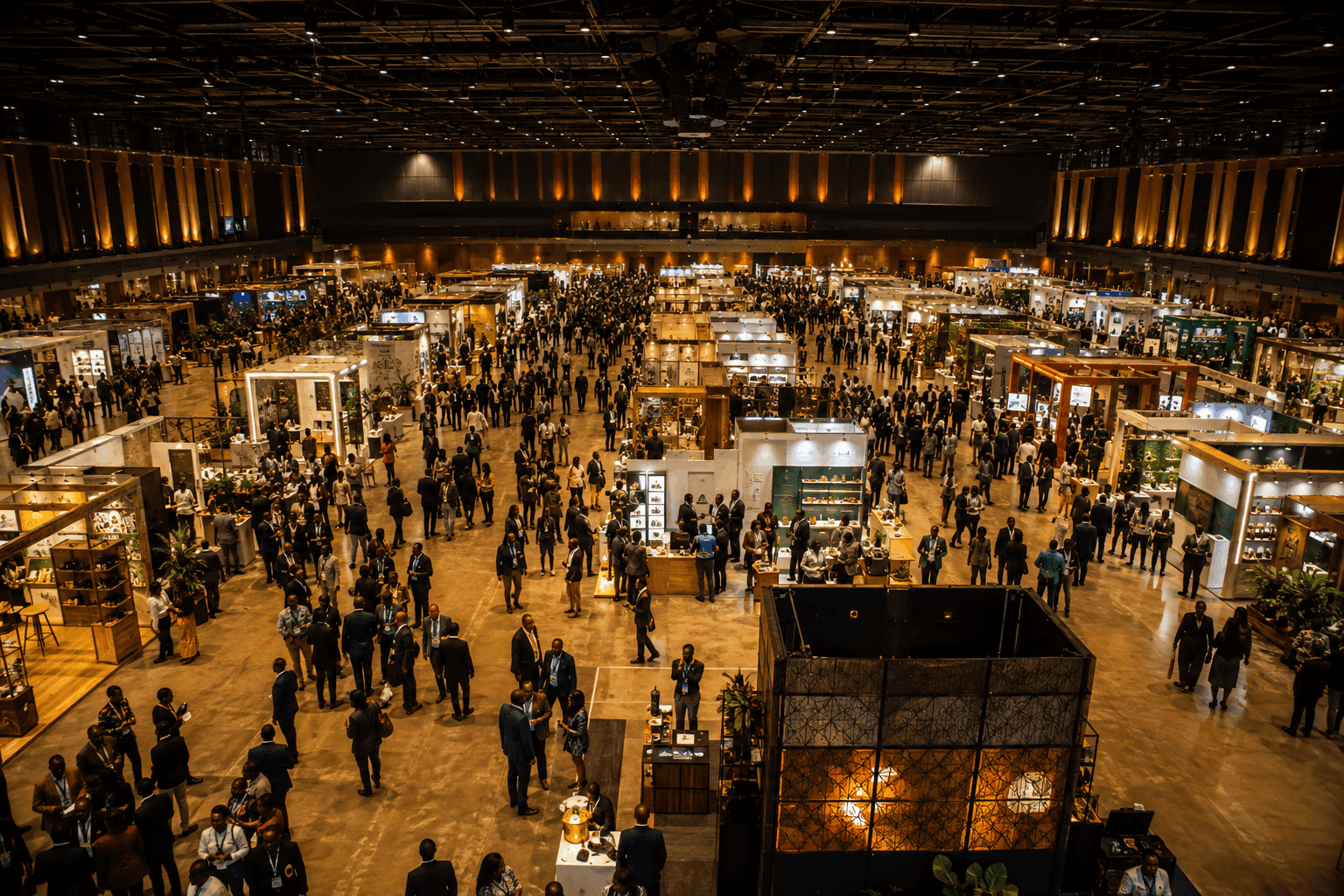
The Africa Coffee and Tea Expo 2026 at the Kigali Convention Centre, 8 to 10 July, brings together international buyers, exporters, policymakers, and producers in one setting. It is the first continental platform of its kind. A program overview is available at africacoffeeteaexpo.com.
The institutional momentum behind Rwanda’s tea sector, the FAO partnership, the PSTA5 targets, the PSAC expansion, and the data from Mombasa’s 2025 auction have a moment to reach an international buyer audience directly, rather than arriving through catalog listings and auction results. That is a communication window, and communication windows are strategic assets.
Certification built the foundation that makes Rwanda’s tea sector credible on the global market. Buyer psychology is the layer that converts that credibility into price. Both belong in the same strategy, aimed at the same buyers, in the same room. That room is in Kigali this July.
FREQUENTLY ASKED QUESTIONS
Why does certified Rwandan tea still sometimes sell near the market average at Mombasa rather than at a premium?
Certification establishes that a lot is safe, traceable, and compliant. It gets the product to the auction floor. The price it fetches once there depends on additional buyer trust signals: consistent supply over time, recognisable origin identity, and confidence in long-term reliability. A certified lot from an origin without a strong track record on these signals competes near the $2.05 market average rather than at the premium levels Rwanda’s best-known marks achieve, where Kitabi BP1 has reached $7.12 per kilogram.
Who buys at the Mombasa Tea Auction and what do they actually prioritize?
Pakistan is the largest single buyer block, accounting for roughly 38 percent of Mombasa volume, according to EATTA. Egypt follows at around 18 percent, and the UK at around 9 percent. Pakistani and Egyptian buyers primarily source for blending and need consistent volume and price stability. UK buyers are more likely to pay for origin story and consistency for specialty and supermarket own-label products. A real export strategy addresses more than one of these buyer types simultaneously.
What is Psychic Marketing and how does it apply to tea and coffee exports?
Psychic Marketing is a framework developed by Dr. Martin Luther Mawo for understanding what a buyer values before they articulate it themselves. In agricultural exports, it means recognizing that a purchasing decision is shaped by signals around the product, supply reliability, origin identity, and institutional credibility, not only by measurable quality attributes. These signals can be built deliberately through export communication and buyer relationship strategy, and they are the layer that converts certification into premium pricing.