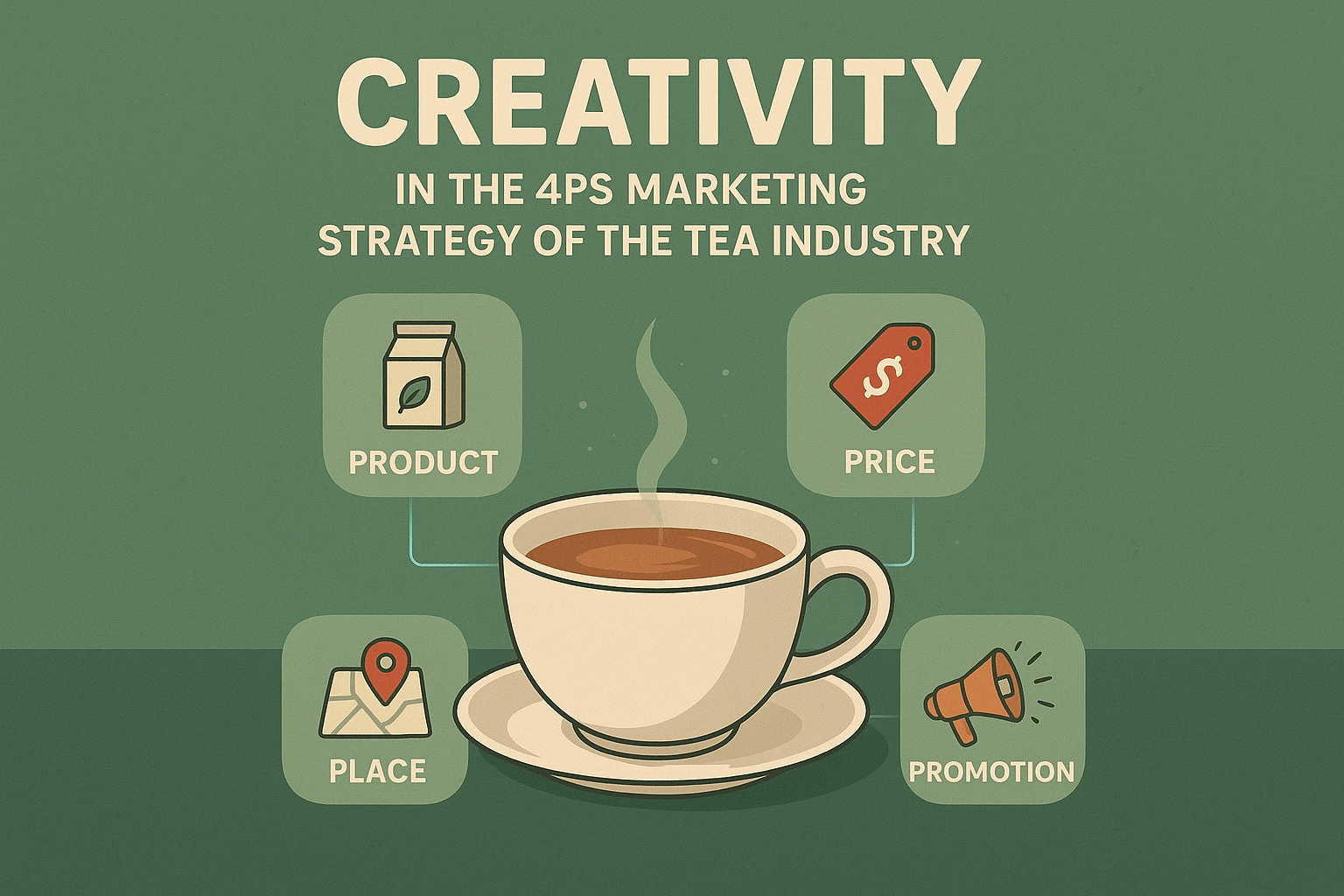
In today’s competitive beverage market, creativity in tea marketing is more important than ever. With hundreds of brands vying for attention, successful tea businesses must think beyond tradition. By applying creative strategies to the 4Ps of marketing Product, Price, Promotion, and Place tea brands can differentiate themselves, connect emotionally with consumers, and build long-term loyalty.
Let’s explore how creativity enhances each of the 4Ps in the tea industry.
1. Creative Product Development in the Tea Industry
In the world of tea, product differentiation goes far beyond flavor. Brands today are exploring innovative tea products to meet modern consumer demands.
Creative Ideas:
- Functional Teas: Blends infused with herbs for sleep, digestion, energy, or immunity (e.g., chamomile with valerian root).
- Artisanal & Organic Options: Locally sourced, hand-picked, and pesticide-free teas.
- Unique Packaging: Pyramid tea bags, reusable tins, or biodegradable wraps with artistic designs.
- Tea Blends & Fusion: Combining traditional teas with superfoods like turmeric, matcha, or CBD.
> A creative tea product doesn’t just quench thirst it tells a story and delivers an experience.
2. Creative Pricing Strategies for Tea Brands
Pricing plays a strategic role in how customers perceive the quality and exclusivity of your tea. Creative pricing models can expand your market reach while maintaining profitability.
Creative Ideas:
- Tiered Pricing: Offer budget, premium, and luxury lines (e.g., basic green tea vs. aged Pu-erh).
- Subscription Models: Monthly tea boxes with new flavors, perfect for gifting or exploration.
- Bundle Offers: Mix-and-match tea kits or wellness combos (e.g., “Sleep Well Set” with tea, mug, and herbal oil).
- Pay-What-You-Can (for causes): Used in social enterprises to support fair trade.
> Tea pricing isn’t just about cost it’s about value, lifestyle, and emotional connection.
3. Creative Promotion in Tea Marketing
The promotion element is where tea brands can truly express their personality and connect with their target audience. With the rise of social media, content marketing, and experiential branding, tea marketing has gone digital and emotional.
Creative Ideas:
- Storytelling Campaigns: Share the journey of tea from farm to cup, focusing on farmers, rituals, or cultural heritage.
- Influencer Collaborations: Partner with wellness influencers, yoga instructors, or chefs.
- User-Generated Content: Encourage customers to post tea moments with hashtags like #MyMorningTea or #TeaWithMartin.
- Virtual Tea Tastings: Host Zoom or Instagram Live sessions to showcase blends and teach preparation techniques.
> A strong promotional strategy turns a humble tea leaf into a lifestyle movement.
4. Creative Placement (Distribution) in the Tea Industry
“Place” refers to how and where your tea reaches customers. The modern tea consumer expects convenience and experience, whether they’re shopping online or in-store.
Creative Ideas:
- Pop-Up Tea Bars: Set up temporary stands at wellness events, farmers’ markets, or shopping malls.
- E-commerce & Mobile Apps: Sell directly through your website with subscriptions, personalized recommendations, and reviews.
- Tea Cafés or Lounges: Build community spaces where tea is both served and sold.
- Strategic Retail Partnerships: Collaborate with yoga studios, bookstores, and eco-friendly stores to expand visibility.
> Creative placement ensures your tea brand is accessible, experiential, and unforgettable.
Final Thoughts: Creativity Drives Growth in Tea Marketing
From the leaves in the cup to the brand on the shelf, creativity is essential to succeed in the modern tea market. By embracing innovative approaches to the 4Ps Product, Price, Promotion, and Place tea brands can carve out a unique space and develop a loyal customer base.
If you're in the tea industry, now is the time to rethink your marketing strategy. Let your creativity flow just like a perfect cup of tea.